
Myofascial Release in Downtown Vancouver

What is myofascial release?
Myofascial release is a massage therapy technique that uses gentle, sustained pressure and stretching to help release restriction in the fascia, the connective tissue that surrounds and supports muscles, joints, nerves, and other structures.
Everest Therapeutics offers myofascial release with more than 30 Registered Massage Therapists at 970 Burrard Street in downtown Vancouver, seven days a week from 7am to 9pm. A first appointment is 60 minutes and costs $145 plus GST, and you can book directly without a referral.
Myofascial release is a hands-on massage therapy technique that focuses on fascia, the connective tissue that surrounds and supports muscles, joints, nerves, blood vessels, and organs.
At Everest Therapeutics in downtown Vancouver, our Registered Massage Therapists use myofascial release to help reduce soft tissue restriction, improve mobility, and support clients dealing with chronic tension, postural strain, injury recovery, headaches, neck pain, back pain, shoulder tension, and recurring muscle tightness.
Everest Therapeutics is a registered massage therapy clinic located in the Electra Building at 970 Burrard Street, MZ2, in downtown Vancouver.
Book a myofascial release appointment
Book online with one of our Registered Massage Therapists or call Everest Therapeutics to schedule a visit.
Last updated: September 2026
Recommended Therapists for Myofascial Release








What is Myofascial Release?
Myofascial release is a gentle but specific form of manual therapy that works with the body’s fascial system.
Fascia is a continuous network of connective tissue that runs throughout the body. It surrounds muscles, bones, joints, nerves, and organs. When fascia becomes restricted because of injury, stress, repetitive strain, surgery, inflammation, posture, or long-term tension, it can contribute to pain, stiffness, limited movement, and symptoms that show up away from the original area of restriction.
Unlike a general relaxation massage, myofascial release uses slow, sustained pressure and stretching. The goal is to help restricted tissue soften, lengthen, and move more freely.
Who books myofascial release
Clients book myofascial release for:
- Chronic muscle tension
- Neck and shoulder tightness
- Low back pain
- Headaches related to muscle tension
- Jaw tension and TMJ-related discomfort
- Postural strain from desk work
- Sports-related soft tissue restriction
- Repetitive strain injuries
- Scar tissue restriction
- Limited mobility
- Fascial tightness
- Stress-related body tension
- Recurring pain patterns that do not fully resolve with general massage
This treatment focuses on pain or tension that feels connected across multiple areas of the body, such as low back tightness that also affects the hips, ribs, shoulders, neck, or head.
How Fascia Can Affect Pain and Movement
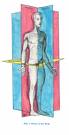 Fascia is interconnected, which means restriction in one area can place tension on other areas of the body.
For example, a client with chronic low back tension often feels tightness through the hips, ribs, upper back, neck, or shoulders. The original discomfort sits in the lower back, while the contributing restriction runs through several connected areas.
This is why myofascial release often looks at the body as a whole, not just the painful spot.
A Registered Massage Therapist assesses posture, movement, tissue texture, pain patterns, and areas of restriction before deciding where treatment begins.
See the full range of conditions massage therapy can help with at our downtown Vancouver clinic.
What Happens During a Myofascial Release Treatment?
During a myofascial release session, your Registered Massage Therapist applies gentle, sustained pressure to areas of restriction.
The pressure is usually slower and more sustained than traditional massage. Instead of quickly rubbing or kneading the tissue, the therapist holds a stretch or contact point long enough for the fascia to soften and respond.
A typical session includes:
- Gentle sustained pressure
- Slow fascial stretching
- Tissue release techniques
- Movement-based assessment
- Work around related areas, not only the painful area
- Breathing and relaxation cues
- Home care suggestions when appropriate
The treatment should not feel forced. Your therapist will adjust the pressure and technique based on your comfort, symptoms, goals, and tissue response.
Is Myofascial Release Painful?
Myofascial release is usually gentle, but it can still create strong sensations when restricted tissue is being treated.
Some clients feel stretching, warmth, pressure, softening, or a sense of release. Others notice mild soreness afterwards, especially if the restriction has been present for a long time.
Your therapist should always work within your tolerance. If a technique feels too intense, you should tell your therapist so the pressure can be adjusted.
Myofascial Release for Neck Pain and Shoulder Tension
Clients book myofascial release for neck pain and shoulder tension when tight fascia, muscle guarding, posture, stress, or repetitive strain are contributing to symptoms.
This can be common for people who work at a desk, use screens for long periods, drive often, train intensely, or carry stress through the upper back, shoulders, jaw, or neck.
Treatment focuses on the neck, shoulders, upper back, chest, jaw, ribs, or related areas depending on the pattern of restriction.
Myofascial Release for Back Pain
Clients also book myofascial release for low back pain, hip tension, glute tightness, and postural strain.
Because the fascial system is connected, the therapist assesses and treats areas around the pelvis, hips, ribs, spine, abdomen, or legs when those areas appear to be contributing to the back pain pattern.
The goal is to reduce restriction, improve movement, and support better function.
Myofascial Release for Scar Tissue and Injury Recovery
After an injury or surgery, tissue can become less mobile. Scar tissue, inflammation, guarding, and changes in movement can create restriction around the affected area.
RMTs use myofascial release to support soft tissue mobility during recovery when it is clinically appropriate.
If your symptoms are related to a recent injury, surgery, medical condition, or complex pain issue, speak with your health care provider and let your RMT know your full history before treatment.
Why Choose Everest Therapeutics for Myofascial Release?
Everest Therapeutics is one of downtown Vancouver’s leading registered massage therapy clinics. Our clinic focuses on RMT care, soft tissue treatment, pain relief, mobility, stress-related tension, and recovery support.
Clients choose Everest because:
- We are located in downtown Vancouver at 970 Burrard Street
- Our clinic focuses on registered massage therapy
- We have 30+ RMTs
- We offer online booking through Jane
- We provide care for pain, tension, injury recovery, posture, stress, and movement concerns
- We are open seven days a week from 7 AM to 9 PM
- We have A 4.9 out of 5 rating from 499 Google reviews
Related Treatments
Explore related treatments and conditions at Everest Therapeutics:
- Registered Massage Therapy Downtown Vancouver
- Deep Tissue Massage Vancouver
- Trigger Point Therapy Vancouver
- Craniosacral Therapy Vancouver
- Visceral Manipulation Vancouver
- TMJ Massage Therapy
- Neck Pain
- Back Pain
- Headaches and Migraines
- Sports Injuries
- Pricing
- Direct Billing
- Book Online
- Contact
- Muscle Stretch Videos
Finding myofascial release near you in Vancouver
We are at 970 Burrard Street, MZ2, on the mezzanine of the Electra Building between Nelson and Barclay. That is a few minutes on foot from the West End, Yaletown and Coal Harbour, a short walk from Burrard Station, and on bus routes running through the downtown core.
Appointments run from 7am to 9pm every day of the week, including holidays, so a session fits before work, on a lunch break or after the office empties out. You can book online at any hour and choose your therapist directly. Our RMT downtown Vancouver page has the building entrance, parking and timing detail, and registered massage therapy in Vancouver covers how RMTs are regulated in BC.
Frequently Asked Questions
What is myofascial release?
Myofascial release is a massage therapy technique that uses gentle, sustained pressure and stretching to help release restriction in the fascia, the connective tissue that surrounds and supports muscles, joints, nerves, and other structures.
What does myofascial release help with?
Clients book myofascial release for chronic tension, restricted movement, neck pain, shoulder tightness, back pain, headaches, scar tissue restriction, postural strain, sports-related tension, and recurring soft tissue pain patterns.
Is myofascial release the same as deep tissue massage?
No. Deep tissue massage usually uses firmer pressure to work into deeper muscle layers. Myofascial release is often slower and more sustained, with a focus on fascial restriction and connective tissue mobility. Some RMTs combine both approaches in one treatment.
Is myofascial release painful?
No. Myofascial release is gentle, though restricted tissue can feel sensitive during treatment. Your Registered Massage Therapist should adjust the pressure based on your comfort and response.
How many myofascial release treatments will I need?
It depends on your condition, how long the restriction has been present, your goals, and how your body responds. Some clients feel improvement after a few sessions, while long-standing issues often need a longer treatment plan.
Can myofascial release help with posture?
Yes. It suits postural strain that is connected to muscle and fascial restriction. Your RMT will also suggest home care, stretching, movement changes, or a referral to another provider when that helps.
Do Registered Massage Therapists provide myofascial release at Everest?
Yes. Everest Therapeutics has Registered Massage Therapists who offer myofascial release in downtown Vancouver. Check the current therapist list and booking page to choose the right practitioner.
Where is Everest Therapeutics located?
Everest Therapeutics is located in the Electra Building at 970 Burrard Street, MZ2, in downtown Vancouver.
Reviews of our therapists
This Google review is about a therapist who offers myofascial release at Everest. The reviewer did not necessarily book this treatment.
“Javier is one of the best RMTs I’ve ever had. He truly listens, remembers everything you share, and ensures you get exactly what you need from each session. His massages are thoughtful and thorough – you can really feel how much care and effort he puts into his work.”